
Commercial carpet cleaning must be fast, thorough, and equipment-friendly. Yet agitation from extractors, rotary scrubbers, or spray systems can create excessive foam. This slows cleaning, increases drying time, and may allow foam to reach vacuum motors or leave unwanted residue.
A carpet defoamer is not a replacement for detergent. It is a process aid that helps control foam so cleaning can run more smoothly.
How Carpet Defoamers Work
Quality defoamers act on the foam film rather than simply “pushing foam down.” They spread across the bubble surface, reduce film stability, and help bubbles collapse more quickly. At the same time, they can help limit new foam formation during continued agitation.
When properly selected, a defoamer should not reduce the cleaning performance of the detergent or leave a heavy film on carpet fibers.
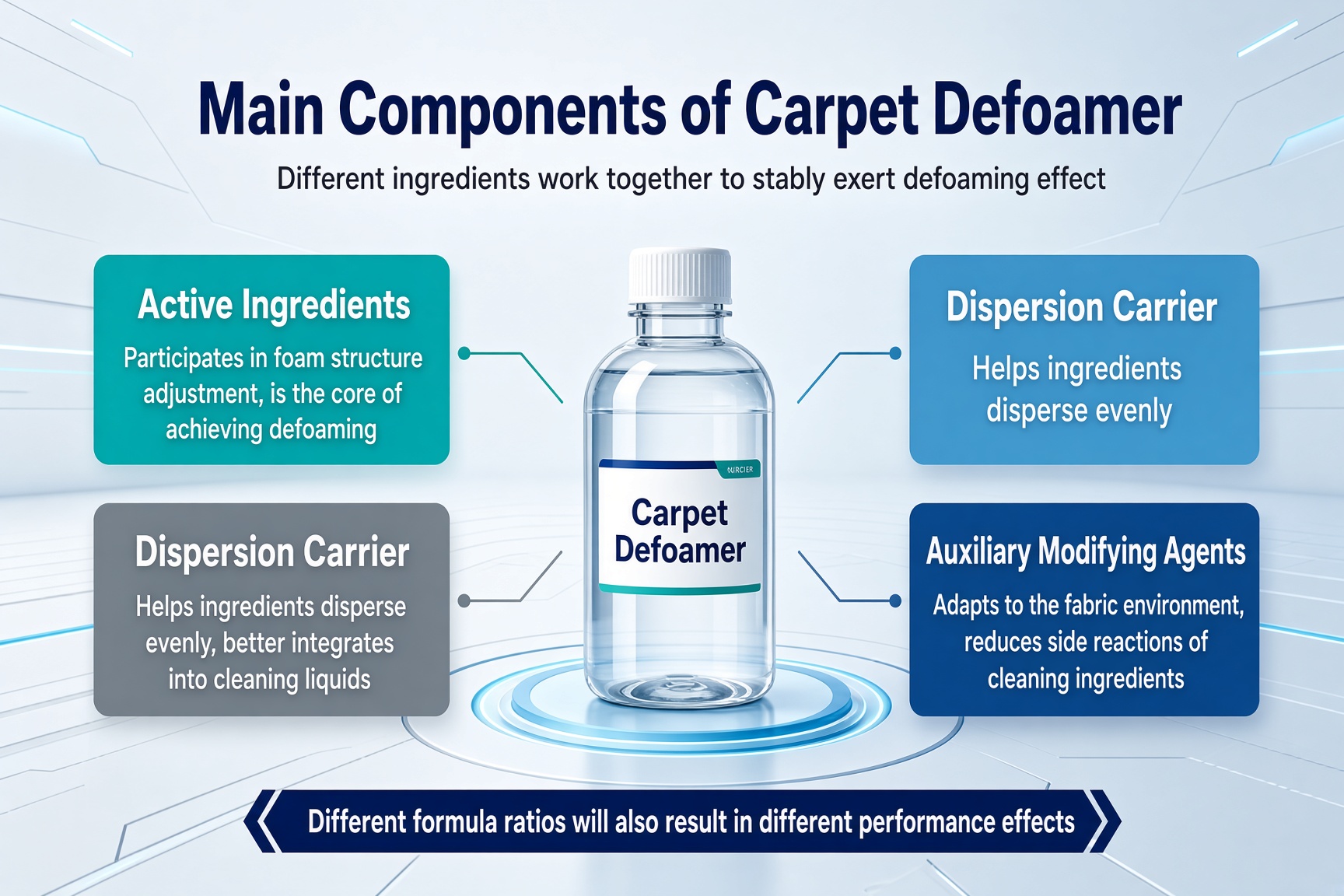
Core components work synergistically for stable foam control
Why Facility Managers and Cleaning Teams Use Them
Protect cleaning equipment: Helps prevent foam from entering vacuum or extraction units.
Improve cleaning efficiency: Reduces foam interruption during carpet extraction.
Support faster drying: Less trapped foam can mean better moisture removal.
Reduce residue risk: Proper dosage helps avoid sticky buildup that attracts soil.
Support consistent results: Especially useful in high-traffic areas and deep-cleaning cycles.
Safety, Compatibility and Environmental Considerations
Carpet defoamers should be chosen with both performance and safety in mind.
Fabric compatibility: Suitable formulas should be safe for common carpet fibers such as nylon, polyester, polypropylene and wool blends when used as directed.
Detergent compatibility: The defoamer should mix well with the existing cleaning solution without separation or clouding.
Residue control: Low-residue formulations are preferred for commercial interiors.
Environmental profile: Biodegradable or low-impact options are increasingly preferred for green cleaning programs.
Always check the product data sheet and confirm compatibility before large-scale use.
Recommended Usage Practices
Start with the recommended dosage. Typical addition levels depend on the formulation and foaming intensity; follow supplier guidance.
Add before cleaning begins. Pre-mix the defoamer into the solution tank or dosing line for more even distribution.
Adjust gradually. If foam persists, increase dosage in small steps rather than adding a large amount at once.
Perform a spot test. Test on a hidden area first, especially for delicate rugs, wool carpets, or new chemical combinations.
Avoid overdosing. Excess defoamer may cause film buildup, slippery floors or reduced cleaning efficiency.
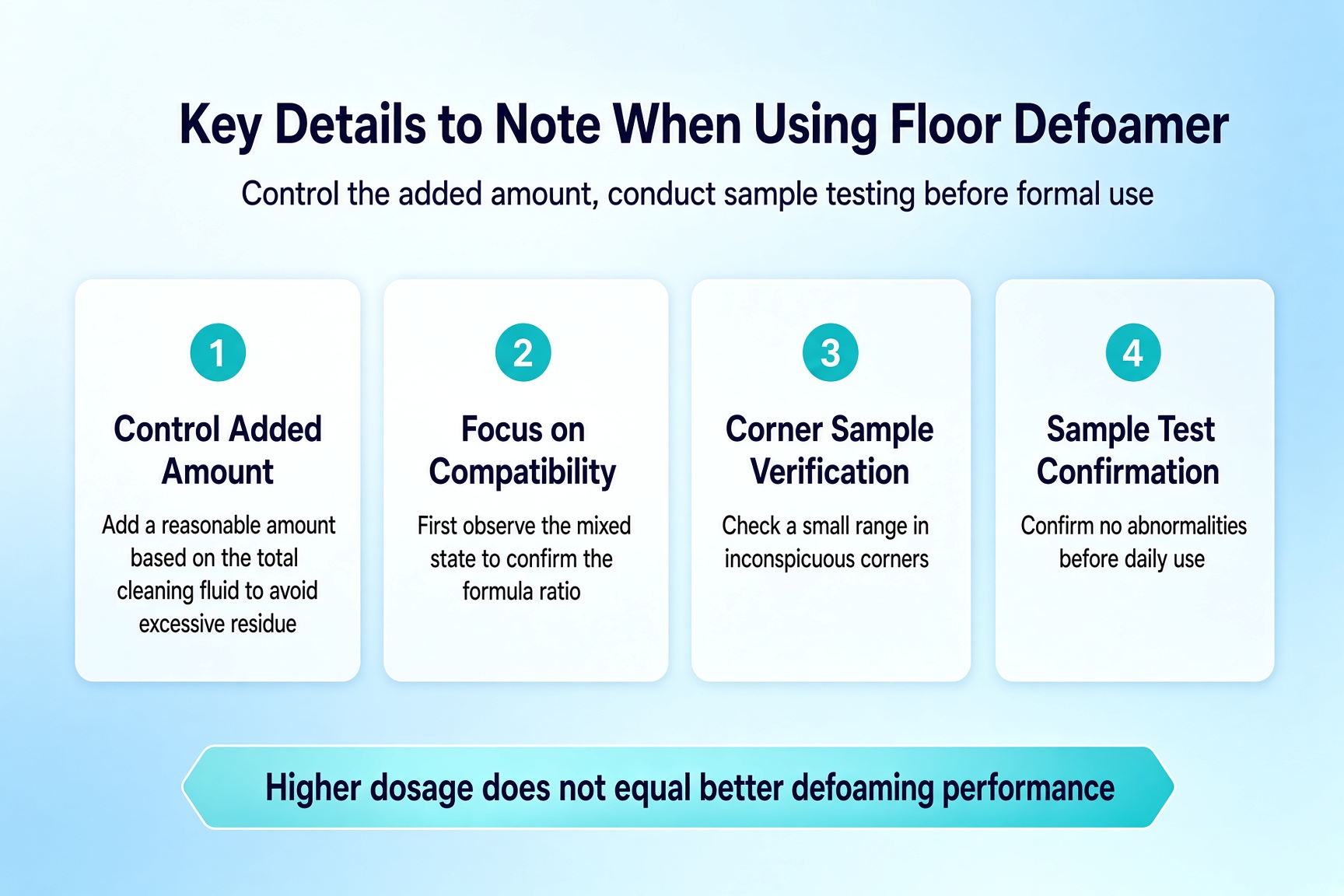
Scientific dosage and prior testing ensure optimal results
FAQ
Q:Will carpet defoamer damage carpets or leave residue?
A:When used at the correct dosage, it should not damage carpet fibers or leave a sticky film. Problems usually come from overdosing or poor compatibility with the cleaning chemistry.
Q:Can it be used with any carpet cleaner?
A:Most defoamers are designed to work with common cleaning agents, but a small pre-test is still recommended before full-scale use.
Professional Testing & Support
The most cost-effective way to solve foam problems is in a small lab beaker, not on a production line that has already stopped. This principle of “lab-first validation” applies to every application we handle. With 20 years of R&D experience in industrial defoamers, we support customers in chemical production, wastewater treatment, and material and parts cleaning. Share your actual pH, operating temperature, and where foam appears, and our technical team will screen candidate grades for your system, send free samples for lab trials, support sample testing when needed, and arrange global export shipment. We do not recommend scaling up until the sample delivers stable results in your system.
