
Coolant is a core consumable for equipment temperature control and winter protection. Throughout the processes of batch blending, high-speed agitation, and circulation transfer, it is prone to generating large amounts of fine, persistent foam. Many production and operations teams overlook foaming issues, treating them as mere surface phenomena that need no deliberate treatment. In fact, foam buildup directly disrupts production rhythm, compromises product quality, and interferes with normal equipment operation. Coolant defoamers are specialized auxiliary materials designed specifically for these scenarios to resolve foam-related problems.
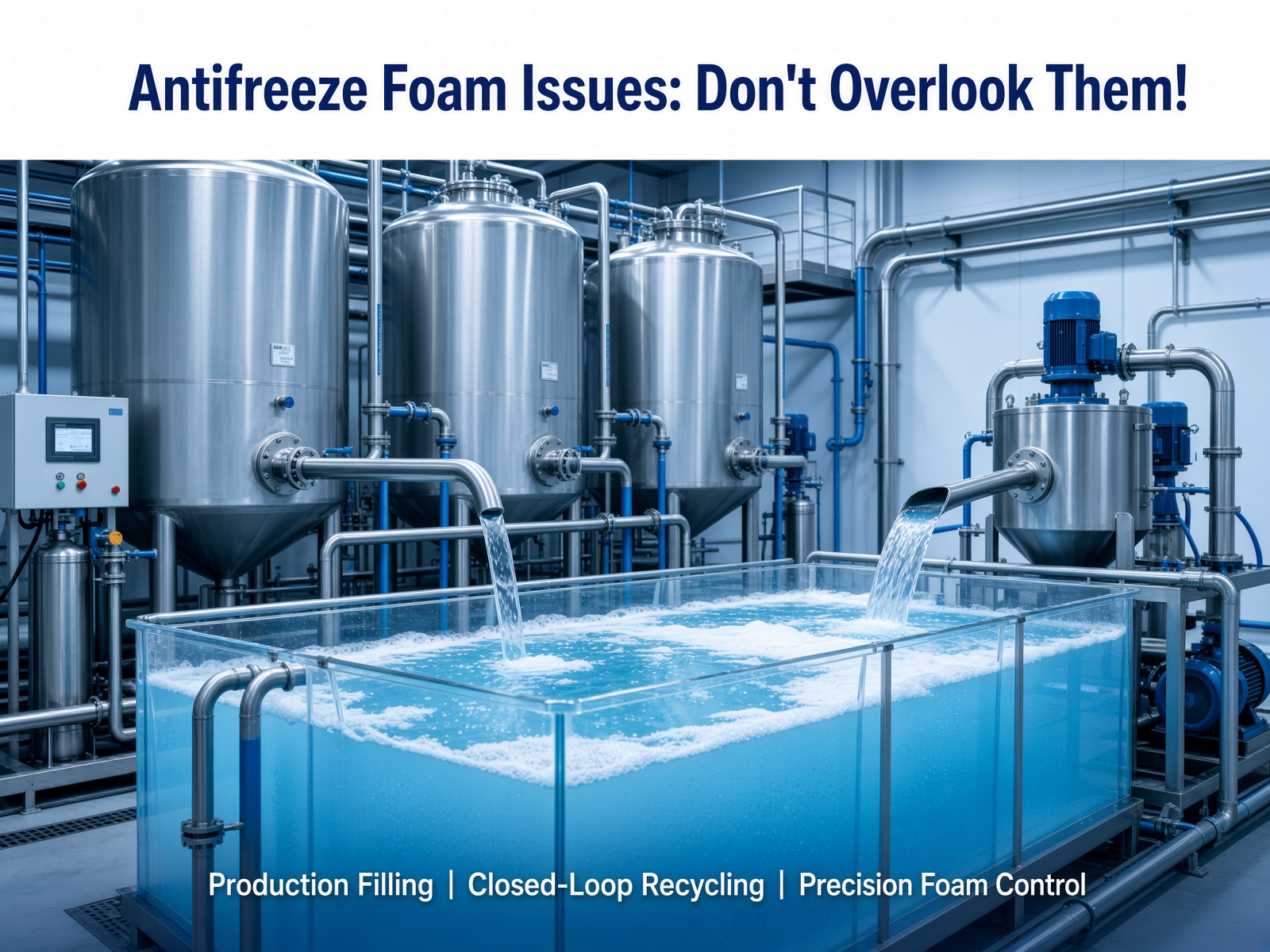
I. Hidden Problems Behind Coolant Foaming
During coolant blending and agitation, air easily gets entrained into the liquid, forming stable foam that does not dissipate readily. The most obvious impact of foam buildup is inaccurate filling metering: the tank appears full, but foam is occupying the volume, leading to deviations in finished product fill levels—resulting in underfilling or overfilling. This not only wastes raw materials but also affects product consistency.
Furthermore, coolant in service continues to foam during equipment circulation, reducing heat exchange efficiency and impairing temperature control performance. Foam also increases liquid turbidity and lowers visual clarity. If left unchecked over time, it can cause false-high liquid levels and inaccurate monitoring data, creating numerous inconveniences for daily operations and maintenance. All these issues can be effectively avoided with a compatible coolant defoamer.
II. Conventional Defoaming Methods: Mostly Treating Symptoms, Not the Root Cause
When faced with coolant foaming, many teams resort to static settling or manual skimming. These traditional methods require no additional cost, but their drawbacks are significant. Natural settling demands considerable waiting time, slowing down overall production progress and making it entirely unsuitable for mass production scenarios. Manual handling is not only inefficient but also struggles to fully remove fine bubbles; foam will regenerate during subsequent agitation and circulation.
Some general-purpose defoaming agents have poor compatibility. When added to coolant, they tend to cause phase separation or cloudiness, disrupting the original compositional balance of the coolant and weakening its core antifreeze, anti-corrosion, and anti-rust performance. For a long-term solution, it is essential to rely on specialized coolant defoamers that are compatible with the coolant's specific formulation, achieving safe defoaming and sustained foam suppression.
III. Core Application Advantages of Coolant Defoamers
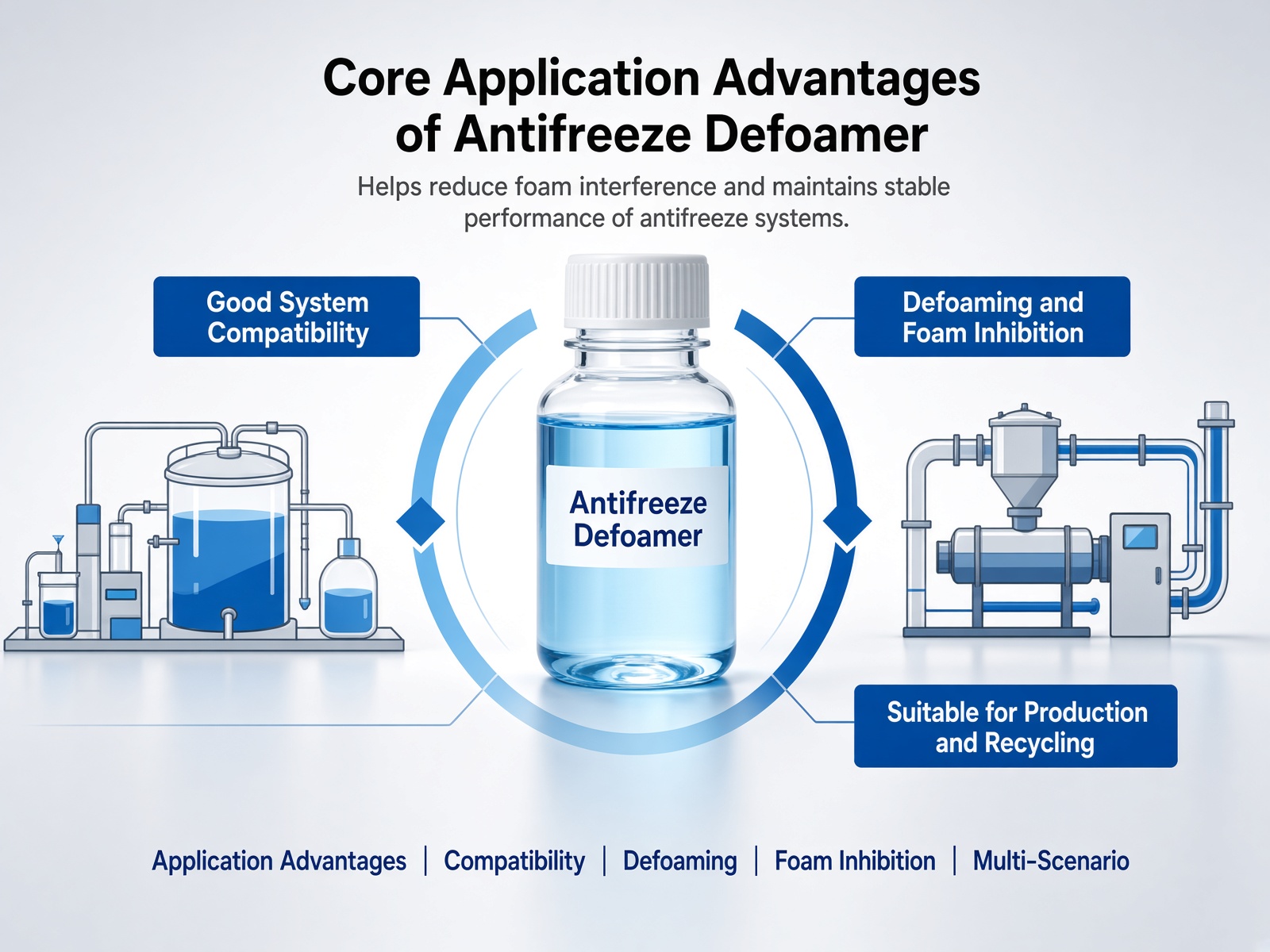
Specialized coolant defoamers are tailored to the coolant's liquid system and demonstrate excellent compatibility. After addition, they do not alter the coolant's color, composition, or core protective properties, nor do they leave residual impurities, ensuring stable finished product quality.
They deliver dual functions of rapid defoaming and long-lasting foam suppression: they quickly eliminate existing foam buildup and control new foam formation during subsequent agitation and circulation. They have a broad application range and are simple to operate, requiring no complex process modifications. Suitable for all scenarios—from coolant production blending to in-service equipment circulation—they significantly improve production efficiency and equipment operational stability.
IV. Application Scenario Breakdown
Passenger car and construction machinery cooling systems: Compatible with glycol-based coolants, with fast defoaming speed and good compatibility, without affecting the coolant's original antifreeze and anti-corrosion performance.
Heavy-duty truck and industrial cooling systems: Outstanding high-temperature resistance, suitable for high-temperature conditions above 120°C, with persistent foam suppression, ideal for equipment running continuously for extended periods.
Eco-friendly coolants: Plant-oil-based carriers are available, biodegradable,meeting environmental regulatory requirements, suitable for customers with strict environmental compliance needs.
Key Advantages of Coolant Defoamers
Summary
Coolant foaming is by no means a minor issue; it indirectly affects production efficiency, finished product quality, and equipment performance. By abandoning inefficient traditional defoaming methods and choosing a compatible coolant defoamer, you can address foaming problems at the root, balancing production efficiency with product stability.
Frequently Asked Questions
Q1: Will adding a coolant defoamer affect the antifreeze performance of the coolant?
A1: No. Specialized coolant defoamers have strong compatibility and are developed specifically for coolant systems. When added at the recommended dosage, they do not disrupt the original formulation structure and do not affect core performance attributes such as antifreeze, anti-corrosion, and anti-scaling properties.
Q2: Can coolant defoamers be added throughout the entire process?
A2: Yes. Whether used as a pretreatment during the production blending stage or as a top-up during equipment circulation, they deliver effective defoaming and foam suppression. Small, as-needed additions are sufficient to maintain a stable, long-lasting effect.
Q3: Why can't general-purpose defoaming agents be used in coolants?
A3: General-purpose defoaming agents are not optimized for coolant formulations. After mixing, they are prone to phase separation and cloudiness, interfering with the coolant's original performance characteristics. Therefore, it is safer to prioritize defoamers specifically developed for coolant applications.
