
In the printing and coating industry, the most dangerous foam is often the one you can't easily see. While large, frothy bubbles in a mixing tank are an obvious sign of trouble, it is the microscopic, stabilized micro-bubbles trapped within the printing ink or varnish that cause the most expensive production headaches.
These invisible air pockets disrupt the delicate physics of coating application. They interfere with surface tension, ruin film leveling, and can even lead to catastrophic mechanical failures like web breaks in high-speed presses. Understanding the root cause of these micro-bubbles is the first step toward achieving flawless print quality.
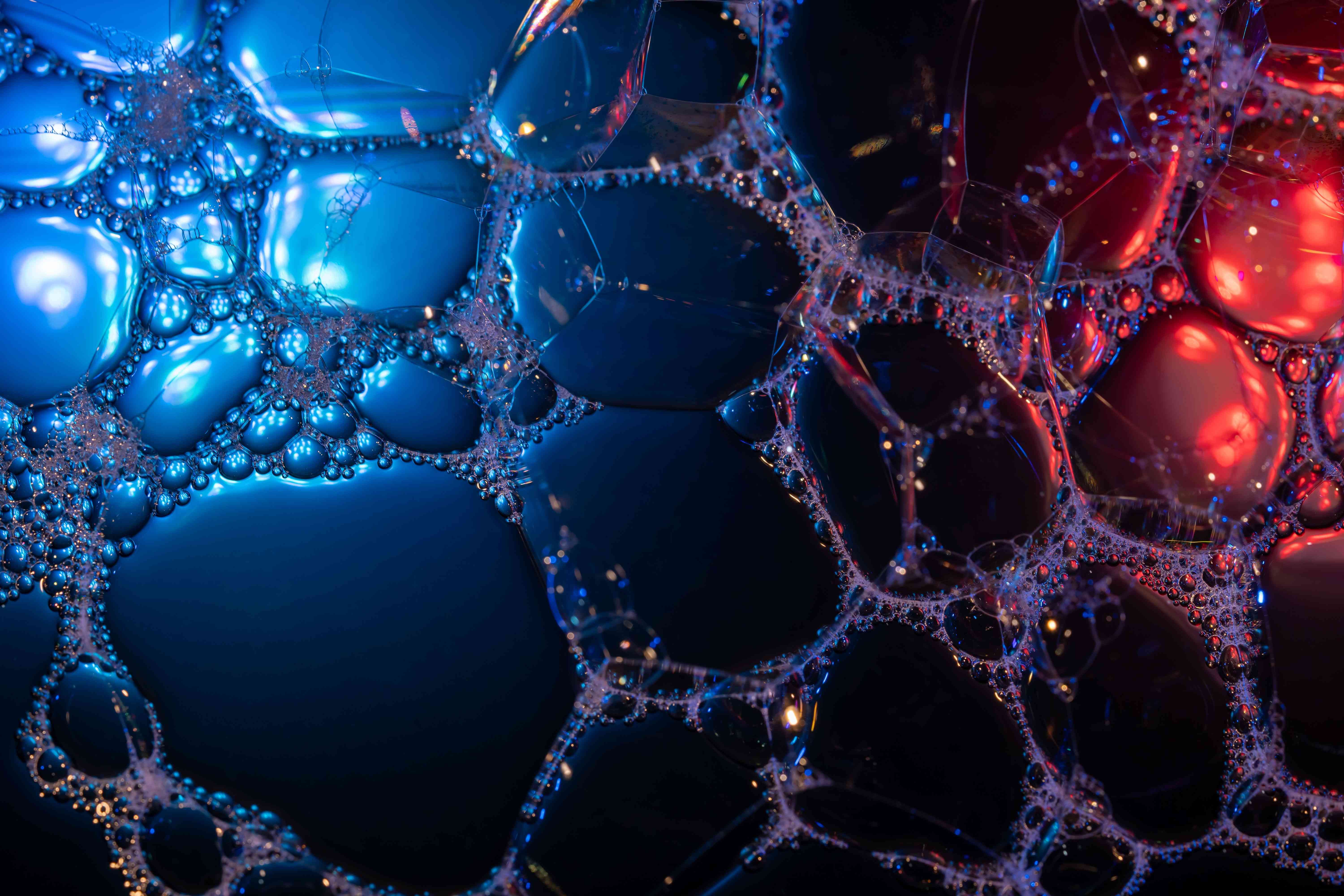
The Hidden Physics of Coating Defects
Why do micro-bubbles form, and why are they so hard to eliminate?
During high-speed dispersion and pumping, air is constantly being sheared into the liquid. When surfactants and wetting agents are present, they stabilize these air pockets, creating a rigid shell that prevents them from rising to the surface and popping naturally.
When this aerated coating is applied to a substrate, the bubbles get trapped in the drying film. As the solvents evaporate, the bubbles either burst, leaving microscopic craters, or remain trapped as voids that weaken the coating's structural integrity and optical clarity. In extreme cases, accumulated foam in the pan or pump can cause cavitation, leading to uneven ink transfer and sudden web tension failures.
Why Generic Antifoams Fail in Modern Printing
Many production managers attempt to solve this by dumping generic silicone oils or mineral oil-based antifoams into the mix. While these might temporarily knock down the visible foam in the tank, they often introduce new problems:
Poor Wetting: Incompatible oils can migrate to the surface, creating localized low-surface-tension zones that repel the coating, leading to craters.
Loss of Gloss: Excessive defoamer can scatter light, dulling the final finish.
Short Lifespan: They get sheared apart by high-speed pumps, requiring constant, costly re-dosing.
Solving the micro-bubble crisis requires a targeted approach that balances defoaming efficiency with the delicate rheology of the ink system.
A Scientific Approach to Foam Control
Effective foam management in printing coatings isn't just about adding chemicals; it's about matching the defoamer's mechanism to your specific process dynamics.
Matching Polarity for Seamless Integration
A defoamer must be slightly incompatible to break bubbles, but compatible enough to disperse evenly. Modern polyether-modified or acrylic-based defoamers are engineered to match the polarity of complex solvent-borne and water-borne systems, ensuring they target the air-liquid interface without disrupting the bulk coating.Protecting Film Leveling and Appearance
Premium printing defoamers are formulated to release trapped air before the coating sets. By reducing the viscosity of the bubble film, they allow micro-bubbles to coalesce and escape during the critical leveling phase, preserving both the gloss and the smoothness of the final print.Sustained Performance Under Shear
High-speed gravure and flexo presses demand robust chemistry. Advanced defoamer formulations utilize solid particle carriers or cross-linked polymers that resist mechanical shearing, ensuring consistent foam suppression from the first yard to the last.Industry Troubleshooting Scenario: The "Orange Peel" & Cratering Challenge
Theory is good, but understanding real-world application is critical. One of the most common challenges in high-speed flexographic and gravure printing is the "orange peel" or micro-cratering defect, especially in glossy UV and solvent-borne varnishes.
The Root Cause: Standard mineral-oil or generic silicone defoamers often fail in these environments because the high-speed circulation pumps mechanically shear the active particles apart. Once broken down, the defoamer separates from the ink, migrating to the surface and causing localized wetting failures (craters).
The Professional Solution: Resolving this requires a defoamer with robust shear resistance. In laboratory simulations and practical validations, utilizing polyether-modified or solid-carrier defoamers specifically engineered for high-shear UV systems effectively solves this issue. These advanced formulations maintain their structural integrity under extreme pump pressures, ensuring that trapped micro-bubbles are released before the coating levels, completely eliminating orange peel while preserving high-gloss clarity.
Practical Application Guide: How to Use Defoamers Correctly
Even the best defoamer will fail if added incorrectly. Follow these practical steps to maximize performance:
Staged Addition Strategy: For optimal results, consider a two-stage approach. Add a portion during the grinding/dispersion phase to prevent foam generation at the source. Add the remaining portion during the final let-down/adjustment phase to eliminate surface foam. (Note: If your process lacks a grinding stage, add the total required amount at low shear during the final mixing phase).
Optimal Mixing & Dispersion: Never use high-shear mixing after adding the defoamer, as this can destroy the active particles. Add the defoamer slowly along the tank wall (avoid dumping it directly into the vortex center) and stir at low speed for 15-20 minutes to ensure uniform distribution without shearing the active ingredients.
Temperature & Viscosity Control: Defoamers work best at stable temperatures. If the ink temperature is too low, high viscosity will prevent the defoamer from migrating to the bubbles. Pre-warming the coating to around 25-30°C can significantly improve defoaming efficiency. Additionally, higher ambient temperatures can accelerate solvent evaporation, trapping bubbles faster, so slight dosage adjustments may be needed.
Don't Let Micro-Bubbles Dictate Your Yield: Free Sample Testing Available
Micro-bubbles are a symptom of complex fluid dynamics, not just a nuisance. If you are struggling with unexplained coating defects, poor leveling, or inconsistent print quality, your current foam control strategy may be the bottleneck.
Every ink formulation and press configuration is unique. Don't guess—test.
If you are looking for a solution that truly fits your production line, please contact us. Tell us about the foam pain points you are currently facing, and we will provide free customized samples for your testing. Let the actual production line data speak for itself, helping you optimize your printing process and protect your bottom line.
