
Foam in bio-fermentation might look harmless, but it is a silent profit killer. It reduces effective tank volume, blocks oxygen transfer (OTR), and significantly increases the risk of contamination. In worst-case scenarios, an entire batch of antibiotics, amino acids, or enzymes can be scrapped.
If you are running yeast, enzyme, or pharmaceutical fermentation, uncontrolled foam doesn't just lower efficiency—it drives up costs.
The "Rebound" Problem: Why Generic Defoamers Fail
Operators often face a frustrating cycle: a new defoamer works well initially, only for foam to rebound violently hours later. Others separate into oil and water or coagulate after autoclaving at 121°C, leaving residues that clog filters.
The root cause? Fermentation broth is not industrial wastewater. It is a complex matrix of proteins, polysaccharides, and microbial metabolites. Combined with high temperatures, long cycles (days or weeks), and continuous aeration, generic defoamers simply cannot survive this environment without harming the microbes.
This is why Polyether-based Bio-fermentation Defoamers have become the industry standard.
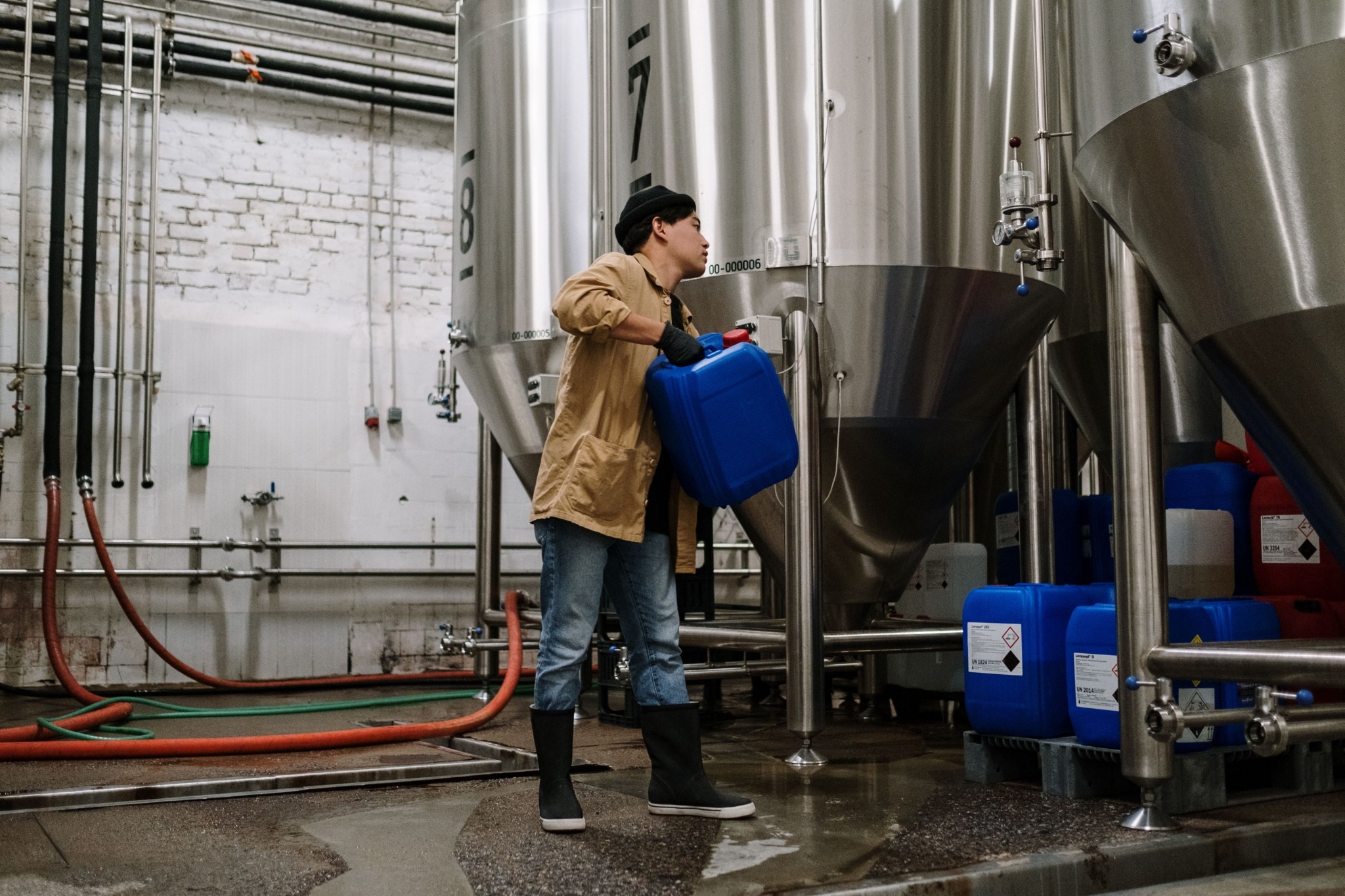
Precise polyether defoamer dosing for stable fermentation
Why Polyethers Outperform Silicones & Oils
Unlike traditional silicone or mineral oil antifoams, polyether molecules are engineered specifically for aqueous, protein-rich environments.
Rapid Knock-down & Long-lasting Suppression: Thanks to their balanced Hydrophilic-Lipophilic Balance (HLB), they disperse instantly into the broth rather than floating on top. They attack the foam film directly, requiring lower dosage for full-cycle control.
Sterilization Stability (Autoclavable): This is critical. Polyethers withstand standard 121°C sterilization without breaking emulsion. They return to a uniform state after cooling, preventing the "oil separation" issues common with other types.
Performance in High Viscosity: As fermentation progresses and biomass accumulates, broth viscosity spikes. Polyethers maintain stable dispersion in thick liquids where others fail.
Biocompatibility: Non-toxic, non-corrosive, and inert. They do not inhibit microbial growth or affect downstream product purity—essential for food and pharma grades.
How to Select the Right Defoamer for Your Strain
Don't rely solely on the datasheet. Real-world performance is what matters.
Test After Sterilization: Always autoclave the defoamer with the medium before testing. Performance can drop significantly after heat treatment.
Check Long-term Suppression: Fast knock-down is easy; keeping foam down for 70+ hours is hard. Look for sustained performance to reduce dosing frequency.
Evaluate Downstream Impact: Ensure the defoamer doesn't interfere with oxygen transfer rates, filtration, or extraction processes.
Run Bench-scale Trials: Every strain and medium is unique. Small-scale testing is the only way to confirm compatibility with your specific aeration and agitation setup.
Key Applications
Pharma: Antibiotics, Vitamins, Amino Acids.
Food & Bev: Yeast production, Organic acids, Flavorings.
Industrial Enzymes: Proteases, Amylases.
Bio-materials & Wastewater: Aerobic biological treatment systems.
Pro Tips for Usage
Dosing: Continuous dripping or staged addition is superior to single bolus dosing.
Injection Point: Avoid adding directly into high-shear zones unless necessary to prevent emulsion breakdown.
Storage: Store in a cool, dry place. Shelf life is typically 12 months.
Why Partner With Us?
We are a specialized manufacturer of polyether fermentation defoamers, certified under ISO 9001, ISO 14001, and ISO 45001. We don't just sell chemicals; we engineer solutions for complex biological environments. Every batch undergoes strict QC to ensure stability.
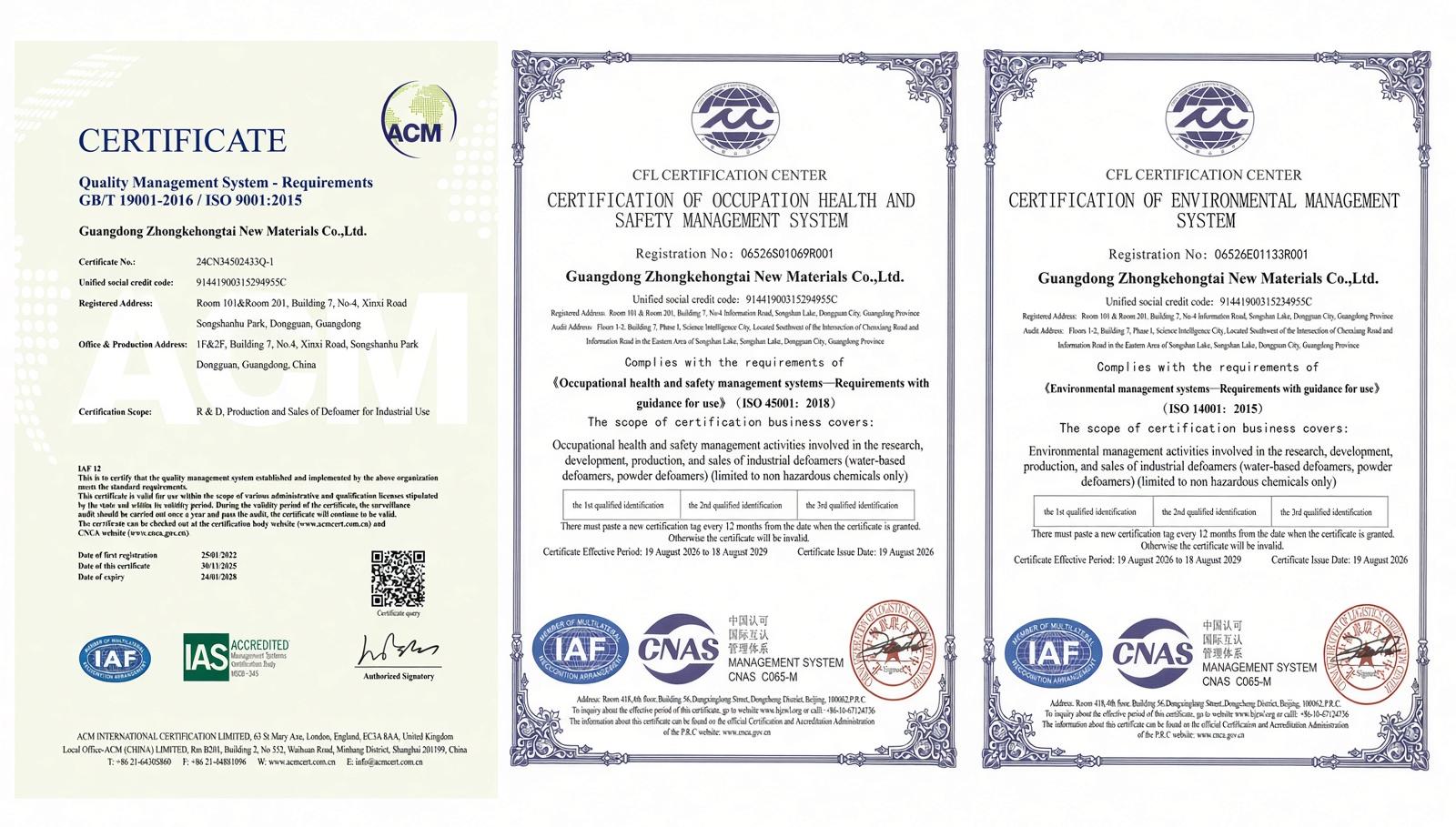
ISO 9001, 14001 & 45001 certified manufacturing
Ready to optimize your yield?
Choosing the right defoamer isn't just about stopping bubbles—it's about securing your entire process from inoculation to harvest. Contact us today for a free trial sample or share your process parameters for a custom recommendation.
FAQ: Common Questions About Fermentation Defoamers
Q1: Can polyether defoamers be sterilized together with the culture medium?
A: Yes. One of the biggest advantages of polyether defoamers is their thermal stability. They can typically withstand 121°C autoclaving for 20-30 minutes without breaking or losing efficacy, making them ideal for sterile fermentation processes.
Q2: Will the defoamer affect the activity of my microorganisms?
A: High-quality bio-fermentation defoamers are designed to be biocompatible. They are non-toxic to common strains (yeast, bacteria, fungi) and do not inhibit growth or metabolism when used at recommended dosages. However, we always recommend a small-scale toxicity test for sensitive strains.
Q3: How is a polyether defoamer different from a silicone defoamer?
A: While silicone defoamers are powerful, they can sometimes cause filtration issues or "fish eyes" in downstream processing. Polyethers are water-dispersible, easier to clean from equipment, and generally safer for food/pharma applications where silicone residue is a concern.
