
In continuous textile printing, water-based color paste is stirred, pumped and circulated. This process traps air and creates foam. At the start of a run, foam may look minor. But during long production cycles, it keeps building up.
Foam reduces effective paste volume, makes paste delivery unstable, and can block screen openings. This leads to intermittent paste flow, missing prints and uneven patterns. The line then has to stop for cleaning and adjustment, increasing downtime and waste.
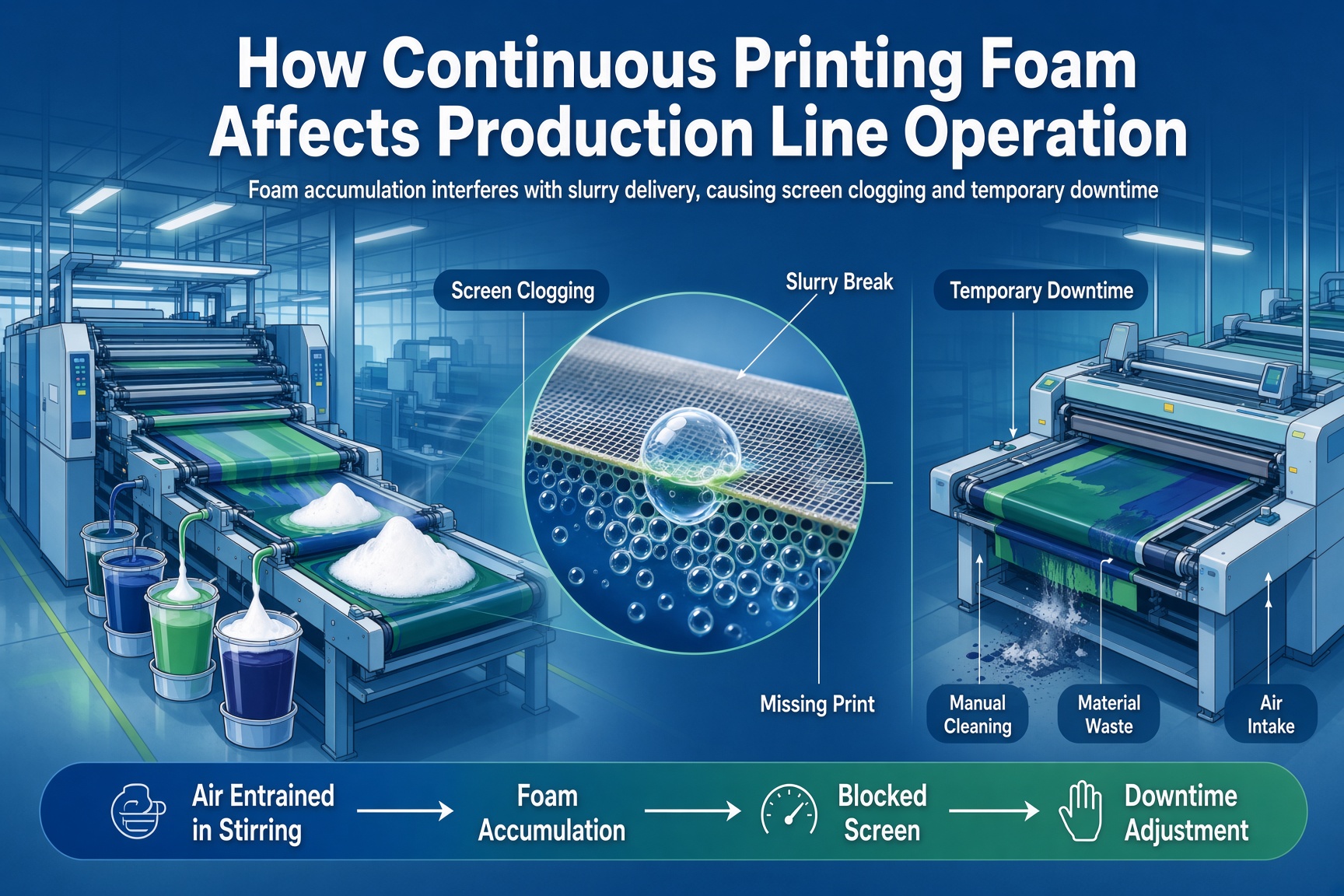
Schematic diagram showing the impact of continuous foam printing on production line operation
A textile printing defoamer helps break existing foam and slow down new foam formation. It should disperse well in water-based color paste, stay compatible with the printing system, and avoid surface separation under normal use.
A suitable defoamer should not change paste color or print appearance. After drying, fabric shade, pattern clarity and color fastness should remain stable. It should also help reduce screen clogging caused by trapped bubbles.
Add the defoamer during paste preparation. Mix it in thoroughly before transferring the paste to the circulation tank. During long runs, small top-ups can be added if foam increases. Do not wait until defects appear on the fabric.
Before mass production, run a small trial under continuous circulation. Check foam level, screen condition, paste flow and printed fabric quality. If issues appear, adjust dosage and mixing time first.
To help you find the right solution faster, Nanhui offers free samples for testing. If you have specific formulation requirements, our technical team can also provide customized defoaming solutions tailored to your production needs. Contact us today to request a sample or technical support.
FAQs
Q1: Will adding a textile printing defoamer cause color spots?
A1: Color spots usually come from poor dispersion or excessive dosage. Add in small amounts, mix well, and confirm compatibility through a small trial.
Q2: Can a printing defoamer clog the screen?
A2: A product with good compatibility should not clog the screen at the recommended dosage. Simulate long-term circulation before use and check the screen condition.
Q3: What is the typical dosage for textile printing defoamers?
A3: Dosage depends on the paste system, equipment and foam level. A common starting range is 0.1%–0.5%, but the final dosage should be confirmed by trial.
