
If foam stays low at idle and explodes when through-spindle coolant starts, treat it as an air-and-shear problem first. The fluid in the drum can look stable. The high-pressure pump then pulls air into a small tank, shears that mixture at the nozzle, and sends it back to the tool in seconds. Foam that was acceptable at low flow can overflow the sump and cut cooling the moment pressure rises.
This is a common CNC complaint: stable in storage, unusable on the machine.
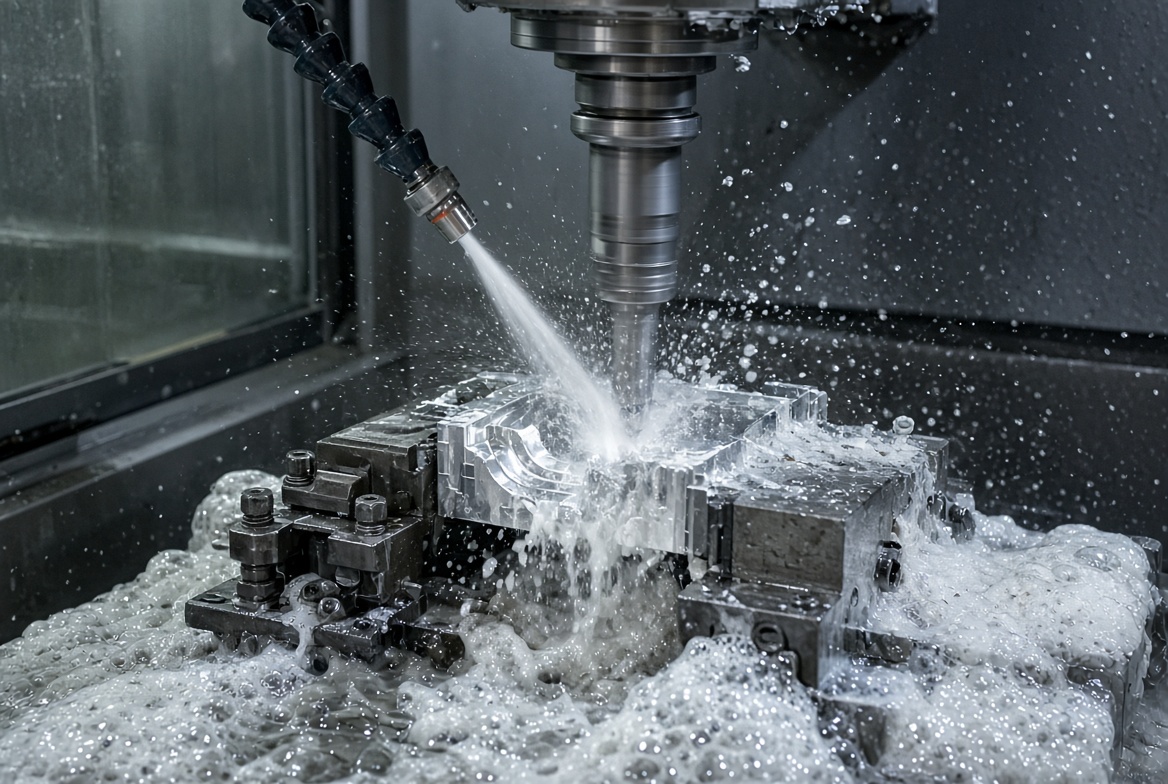
High-pressure coolant creating foam during CNC machining
High pressure creates foam in a different way
Foam needs liquid, air, and a film that holds bubbles. A high-pressure circuit supplies all three at once.
Air enters from a low sump, a leaking suction line, cascading return flow, or a dirty filter. The nozzle then breaks that air into finer bubbles. Soft water, tramp oil, fines, and a fluid that has been used too long make the bubbles harder to collapse. Two other shop conditions make the same foam worse: concentration raised too high, and the original antifoam in the coolant already depleted by filtration or long service. The tank has little time to release air before the same coolant is pumped again.
That is why a beaker test can pass and the machine still foams. The shop problem is shear, not only the label on the drum.
How to tell it is a pressure problem
Foam stays low at idle, then rises as soon as through-spindle or high-pressure coolant starts
Tank volume has not increased, but the sump still overflows
Pumps sound hollow or level sensors trip
Tools lose cooling and start marking the part
Foam appears at the nozzle or return first, not in a standing drum
If the drum already foams when you pour it, the fluid itself may be unstable. If foam appears only at full pressure, check the machine path before adding more chemistry.
Check the machine before adding more defoamer
Pouring extra antifoam is the fastest reaction and the least useful one. Foam may drop briefly and then return, because air is still being generated.
Check these points first:
Sump level too low for the pump
Air leak on the suction side
Return coolant falling from a height into the tank
Filters or chip conveyors forcing extra agitation
Fluid age, tramp oil, metal fines, and mix concentration
If those items are wrong, even a good coolant will foam under pressure. If those items are acceptable and foam still starts at full pressure, the fluid needs a grade that can survive shear in a circulating system.
What a high-pressure system needs from foam control
The job is not to hide foam for one cycle. The job is to keep the fluid usable while the pump is running. That means fast knockdown at startup, lasting suppression during the cut, and stability after repeated high-pressure passes.
Semi-synthetic, emulsified oil, and fully synthetic coolants still behave differently. The useful detail for a supplier is when the foam starts and where it appears: nozzle, return line, or tank surface.
What to send Nanhui
To recommend a direction, send a short process note:
Single high-pressure machine or central system
Fluid type
Foam starts at pump startup, at full pressure, or after several days
Foam location: nozzle, return, or sump surface
Nanhui supplies customized foam-control solutions for metalworking fluids and industrial process systems. If coolant is quiet in the drum and foams only under pressure, contact us for sample evaluation and technical support.
